
I remember when I first started using AI tools a few years ago. Back then, it felt like using a very advanced search engine or a clever spellchecker. I would ask a question, and it would give an answer. It was a transaction: Input, output, done.
But lately, I’ve felt a shift. I’m not just “using” AI anymore; I’m “working with” it. And apparently, I’m not alone in this feeling.
I’ve been diving into Microsoft’s latest report regarding their projections for the near future (specifically looking ahead to 2026), and one thing is crystal clear: The era of AI as a simple tool is over. We are entering the era of the Digital Partner.
Microsoft has outlined seven key trends that define this shift. As I read through them, I realized this isn’t just about faster computers; it’s about redefining what it means to have a career, a doctor, or even a scientific breakthrough.
Here is my deep dive into these 7 trends and what they actually mean for us regular humans.
1. The Rise of the “Digital Coworker”

This is the headline change. Until now, AI has been reactive. You have to prompt it. Microsoft predicts that AI is evolving into a proactive “Digital Colleague.”


Think about the difference between a calculator and an accountant. A calculator waits for you to punch in numbers. An accountant looks at your finances and says, “Hey, we should change our strategy here.”
- My Take: I’m honestly excited about this. Imagine having a team member who never sleeps, knows every document your company has ever written, and can brainstorm strategy with you—not just summarize text. It means we stop being “operators” of AI and start being “managers” of AI.
2. Agents with Identity (Security First)

As AI starts doing more tasks on our behalf—like booking meetings, buying tickets, or accessing sensitive files—we run into a trust issue. Who is actually doing this?
The report highlights a move toward Security-Focused Agents. These aren’t just faceless bots; they will have defined identities and strict access protocols.
- Why this matters: If I send an AI agent to negotiate a contract for me, the other party needs to know it’s my agent, not a scammer’s bot. We are going to see “ID cards” for AI agents very soon.
3. A Revolution in Healthcare Accessibility
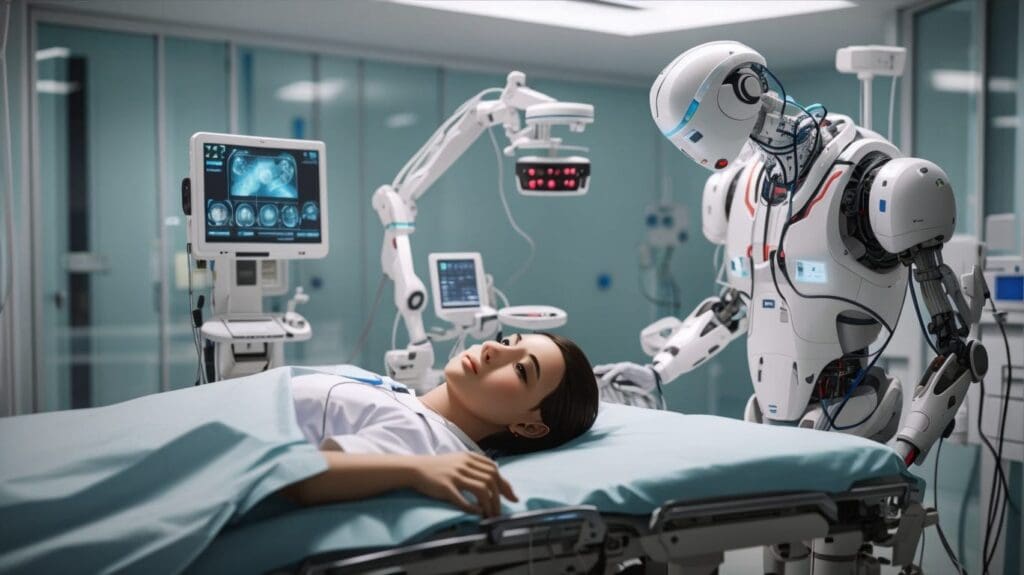
This part of the report actually gave me goosebumps. We all know the healthcare system is overwhelmed. Doctors are burning out.
Microsoft envisions AI stepping in not just to organize files, but to assist in diagnosis and treatment planning. They mentioned their “Tejas” system (specifically the MAI-DxO), which is already achieving an 85.5% accuracy rate in complex cases.
- The Human Angle: This isn’t about replacing doctors. It’s about giving a doctor in a remote village the diagnostic support of a world-class specialist. It’s about bridging the gap so that “getting sick” doesn’t have to mean “waiting months for an answer.”
4. The AI Scientist
If you think AI writing poems is cool, wait until you see it doing chemistry.
The trend here is Scientific Discovery. We are moving past AI that just summarizes existing data. We are entering a phase where AI acts as a laboratory assistant that can generate hypotheses in physics, chemistry, and biology.
I imagine a future where AI scans millions of chemical combinations to find a cure for a disease in days, something that would take human researchers decades. It’s accelerating the scientific method itself.
5. Smarter, Not Just Bigger, Infrastructure
For a long time, the AI race was just about “more parameters” and “bigger data centers.” That’s changing.
The focus is shifting to Efficient Infrastructure. It’s about the quality of intelligence, not just the quantity of brute force computing. It’s about distributing that power efficiently across global networks so we don’t burn down the planet trying to power our chatbots.
- My Observation: I’ve noticed that “smaller,” specialized models are becoming incredibly capable. This trend confirms that bigger isn’t always better; smarter is better.
6. Repository Intelligence (Coding 2.0)
For my developer friends out there, this is big. We are moving beyond “Copilot writing a function.”
The concept is Repository Intelligence. This means the AI doesn’t just see the line of code you are writing; it understands the entire history of your project, the relationship between files, and the “why” behind previous decisions.
- The Shift: It’s the difference between a spellchecker and an editor who has read the whole book. It will help create higher-quality software with fewer bugs because the AI understands the context, not just the syntax.
7. The Quantum-AI Hybrid
And finally, we reach the sci-fi territory. Microsoft is betting big on the convergence of Quantum Computing and AI.
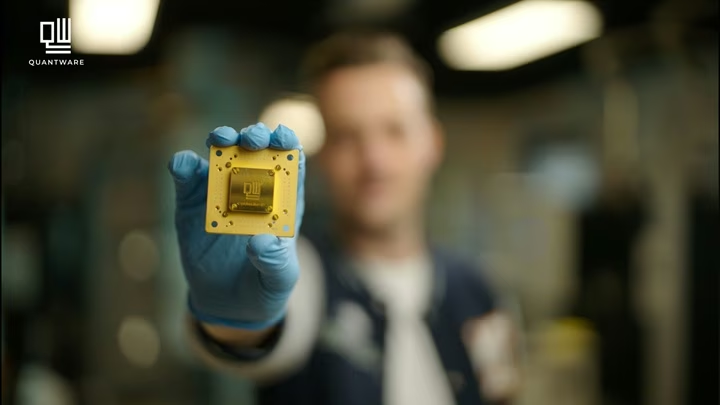
They are talking about hybrid supercomputers. The development of the Majorana 1 chip is a key part of this, designed to correct errors that plague quantum systems. When you combine the pattern recognition of AI with the sheer calculation power of quantum mechanics, you get a tool capable of molecular modeling at a level we can barely comprehend.
- My Take: This is the “Endgame” technology. It’s still early days, but the potential to solve problems regarding climate change or material science is limitless.
Final Thoughts: Are You Ready for a New Partner?
Reading through Microsoft’s vision for 2026, I realized that my role as a content creator and a tech enthusiast is going to change. I won’t be working on a computer; I’ll be working with a digital entity.
It’s easy to feel a little intimidated by this. Will there be room for us? But I choose to look at it differently. If AI can handle the data crunching, the scheduling, and the initial scientific filtering, it leaves us with the one thing AI still can’t replicate: Meaning.
We get to decide why we are doing these things. We get to be the visionaries.
I’d love to hear your perspective. If you could hand over 50% of your current job to a “Digital Coworker” starting tomorrow, which boring tasks would you give it, and what would you do with your extra free time? Let’s chat in the comments.
You Might Also Like;